

Education

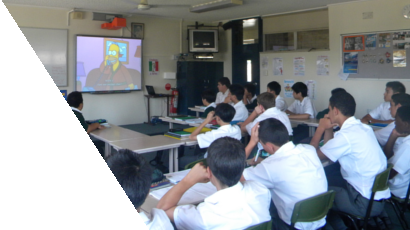
Students with sensory impairment need captioning and audio description when lessons include multimedia resources.

Find out about cap that!, our new campaign asking teachers to turn on captions for literacy and inclusion.

You are here: Home Education

Latest News

  • Wednesday, 14 March 2012
    TED launches education YouTube channel

    From humble beginnings back in 1984, TED has become a global sensation, offering talks on almost any subject to inform and inspire. To the delight of educators worldwide, TED has just launched an education-focused YouTube channel. What’s more, the bulk of the content is captioned.

  • As the use of audiovisual resources in mainstream classrooms increases, so does the need for captions to be used as a learning tool for all students. A number of school-based campaigns encouraging teachers to turn on captions have been successfully launched around the world and continue in 2012.

  • Media Access Australia’s Education Manager, Anne McGrath, has many years’ experience as a primary school teacher and Itinerant Teacher of the Deaf. To start off a big year in our education program, Anne offers her guidance to first time teachers of students who are Deaf or hearing impaired.

  • The Described and Captioned Media Program (DCMP) is a US initiative run by the Department of Education and the National Association of the Deaf. Its aim is to provide equal access to communication and education to students who are Deaf, hearing impaired, blind, vision impaired or deaf-blind. Media Access Australia CEO, Alex Varley, recently visited the DCMP headquarters in South Carolina and was impressed with the developments and new focus that it is taking.

  • At a cabinet meeting in Tasmania this week, Prime Minister Julia Gillard was approached by the mother of a child with a disability, and urged to direct more money towards this area of need. Gillard acknowledged the necessity for greater focus on this area and that the promised $200 million extra funding for students with disabilities is a move toward this.

  • The need for accessible media in schools is becoming more recognised by technology providers. Epson has announced the release of two new projectors which spark hope for greater accessibility in the classroom.

  • Educators across the country were today commended for their commitment to increasing literacy and inclusion through captions. cap that!, a national campaign asking teachers to turn on captions in the classroom, formally acknowledged the commitment of St Anthony’s Primary School, Clovelly (NSW), a major prize winner in the 2011 cap that! competition. The school’s video entry has inspired teachers nationwide to start using the simple tool at their fingertips to improve literacy and learning for students.

Education

Students with sensory impairment need captioning [LINK] and audio description [LINK] when lessons include multimedia resources.  Media Access Australia’s has a comprehensive Education strategy [LINK] to assist and support teachers and students.


Top of page
Tags: